


Coffee & Life
Coffee Cup and Philosophy of Human Being
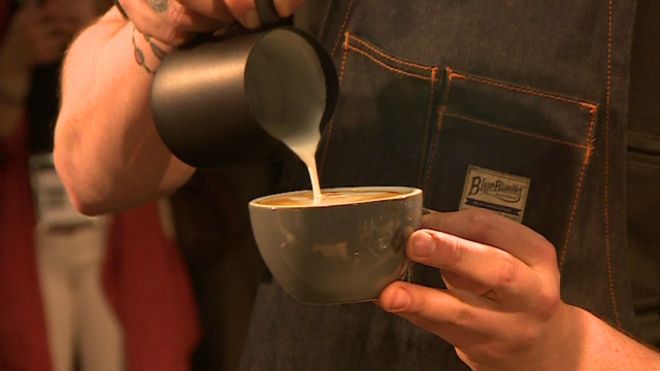
Is coffee deeper than it seems? David Robson meets and interviews a philosopher who believes so and is attempting to use coffee to probe the human mind.
My sip of coffee felt like swallowing a dying ember – smoky and tinged with the smell of creosote. As I paid closer attention, I noticed that it was smoother, its slimy exterior masking a sharper interior, like a blade wrapped in velvet.
I have never paid so much attention to a cup of coffee in my life. I am not sure I have grasped its secrets. But if I have, it is only a glimpse into some of life’s big questions.
My guide in this quest is David Berman of Trinity College Dublin, a philosopher who has spent much of his time studying the complexities of the inner workings and senses of the human mind. Now he’s interested in his favorite beverage and the deep questions that might lurk at the bottom of his cup. The result will be a new book called The Philosophy of Coffee Enjoyment.
With a strong Americano and an open mind, I asked him to share some of his thoughts. The conversation that ensued led me to explore the value of contemplation and why coffee drinkers are so different from tea drinkers.

How many of its properties do you experience when you sip a cup of black coffee? (Photo: Thinkstock)
Coffee connoisseurs may be passionate about the beverage, but it’s surprising that a philosopher would spend time thinking about the qualities of coffee. Surely they’ve spent a lot of time studying the philosophies of Plato and Hume?
For Berman, however, it was a natural move. One of his interests is the inner workings of the mind.
We humans tend to generalize about the world with words, but Berman and others argue that doing so blurs the underlying sensations, preventing us from getting a clear understanding of the subtle workings of the mind.
This idea isn’t just limited to philosophy. There’s evidence that things like language can actually alter perception—a phenomenon known as “top-down processing.” And how the senses work together to create human consciousness is known as the “hard problem” in neuroscience.
So if we can tease these things apart, we will understand ourselves and our inner world better.

The distinctive flavour of coffee is found in just 0.5% of the bean (Photo: Getty Images)
“If you take your coffee seriously like I do, even though you don’t necessarily have to, try to get a first-hand experience,” he explains. He thinks coffee is particularly effective for this experiment. “When you drink coffee, you absorb caffeine, your mind is stimulated and becomes more alert. Your nerves are not in a lethargic state, but clear and alert.”
So I take a sip and try to absorb the flavour.
Berman explains how his research has helped him understand coffee. All coffees have a “common note” that comes from just one oil, caffeol. “It only makes up a small percentage of 0.5% of the bean,” he says, but without it, you wouldn’t recognize coffee. In contrast, he says, there is no “tea essence” in tea; tea is made up of compounds, but no single substance is essential.
The Difference Between Tea and Coffee
Berman thus argues that coffee and tea illustrate two different philosophical visions.

Plato never had a latte with steamed milk (Photo: Getty Images)
Tea is a place where many different flavours complement each other, he said, recalling the Eastern philosophy that all things are intertwined and interconnected.
Coffee, by contrast, is defined by the single essential ingredient, caffeol, as mentioned above, separated from the other flavours, which is perhaps an apt metaphor for the Western tendency to draw a line between the physical and the spiritual. I have a feeling that his argument is not to be taken seriously by everyone.
However, the single ingredient in coffee can be deceptive. When I take a sip, I feel as though a distinct caffeol flavour is activating my tongue, but it is an illusion. To explain this, Berman told me to hold my nose and take another sip. All that remains is a faint hint of the previous flavour.
“That’s one of the surprises of coffee,” he says. “You think you’re tasting coffee, but if you look inside yourself, you find that it’s actually an odor that’s misperceived as a flavor.”
Coffee connoisseurs will tell you that having one primary quality doesn’t stop baristas from making different types of coffee. A light roast will even out the acidity of the coffee, creating a “brighter” finish.
Conversely, a longer, darker roast will build up new proteins and enzymes inside the bean. These chemicals make up the “body” of the coffee; they make the coffee stronger, more creamy, and they block the acidity.
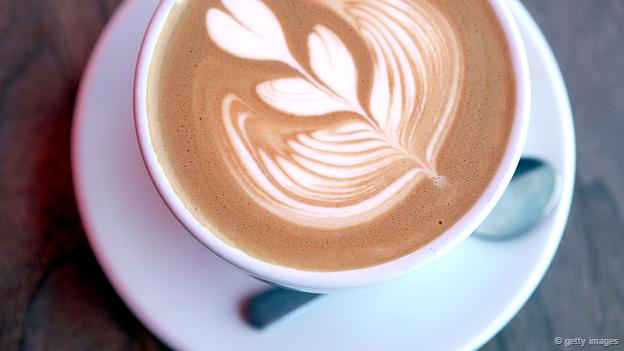
Do you prefer bitter or aromatic coffee? Thinking about different coffee preferences can help us understand psychological differences (Photo: Getty Images)
Berman says that over the decades, coffee tastes have oscillated between sour and bland and bitter and strong.
The first coffees were whole beans, roasted with a deep roast, followed by the first wave of industrially produced coffees, which were more acidic. Then came the second wave, the coffees served in cafes like Starbucks and Costa, which also saw a return to more bitter coffees, and then the third wave, with individual brewers preferring sour, aromatic coffees.
Berman says that the swings between the two extremes give us a deeper understanding of human personality in general.
He suspects that a preference for bitter or aromatic coffee reflects a fundamental “style” of thinking, meaning that if you side with one side, you find it difficult to understand the other side’s point of view. “What you find in different coffee tastes is how much people disagree on fundamental issues,” he says.
My conversation with Berman certainly gave me food for thought. As I finished the last drop of coffee in my cup, I realized that it had been a long time since I had enjoyed a cup of coffee this much.
Even if you’re not convinced by the philosophical value of coffee, Berman may have made a good point about introspection.
David Robson


